Mikael Carstanjen 1975 Courting Dulcimer - Repair Question
Instruments- discuss specific features, luthiers, instrument problems & questions
Thanks for the reply Matt. "Thump testing" was telling me the braces are about three-quarters the way between the fourth and fifth fret on both necks (i.e. symmetrical, as one would expect). I inserted a curved piece of insulated solid core wire through the large sound holes to feel along the underside of the top and found the braces just 1 3/4" from the center of the heart going toward the middle of the dulcimer body. I did the same through the central "rosette" and got 3 3/4" for both braces. This agrees with the "thump testing".
The two large hearts in the bouts are 25mm wide x 15mm "valley to valley" (1" x 9/16'). The small hearts both in the bouts and the central circle are 19mm x 11 mm (3/4" x 7/16"). The central rosette is 16mm in the widest dimension and is 12mm in the shortest (11/16" x 1/2").
Taking a stab at reading your mind, yes I can get an endoscope in there and I am thinking of getting one for this and other projects. I was somewhat optimistic that the bout holes are such short distance away from potential access points. But those sound holes would seem too limiting for the work that needs to be done - I think. If you know better, clue me in - I'd rather leave the sound board intact.
The contemplated option of a circle cut around the central heart pattern would give me a 3 1/4" diameter access hole to work with. Hell, I could get my hand through that to apply glue and install temporary force-fit struts between glued braces and the bottom. I'd fashion a jig to temporally affix to the central sound holes that would in turn provide a pivot post for an arm fitted with a razor knife blade to do the cutting - so the cut would be less than 1/16 wide. I'd probably have to widen that cut a bit for the decorative binding circle that would dress up the sound hole disk when it was reinstalled. To spice things up I'm even contemplating installing an ivory colored O-Port in the large hole then press fitting the sound-hole disk into that. This should provide some awesome resonance. The down-side is that this access hole cutting scheme involves non-reversible modifications that may have a detrimental affect on the instrument's collector value (if any).
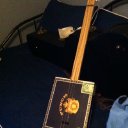
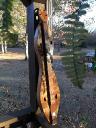
I would entertain back removal, but as previously stated, this task appears daunting considering the dulcimer's size, shape and under-scroll shelves. Here's a more complete set of "as found" photos that better describe what I'm up against. The file also includes some information regarding the builder.
Sorry for the long-winded post, but then again, I'm asking for information that goes well beyond a yes/no answer.









 Have seen the dance groups in their precious and traditional costumes? And for sure you found the "Schuhplattler" in Bavaria quite funny...


 The other two dances (with the fiddling) feel like comfortable tempos for dancing.




 Mikael Carstanjen 1975 (comp).pdf - 2.7MB